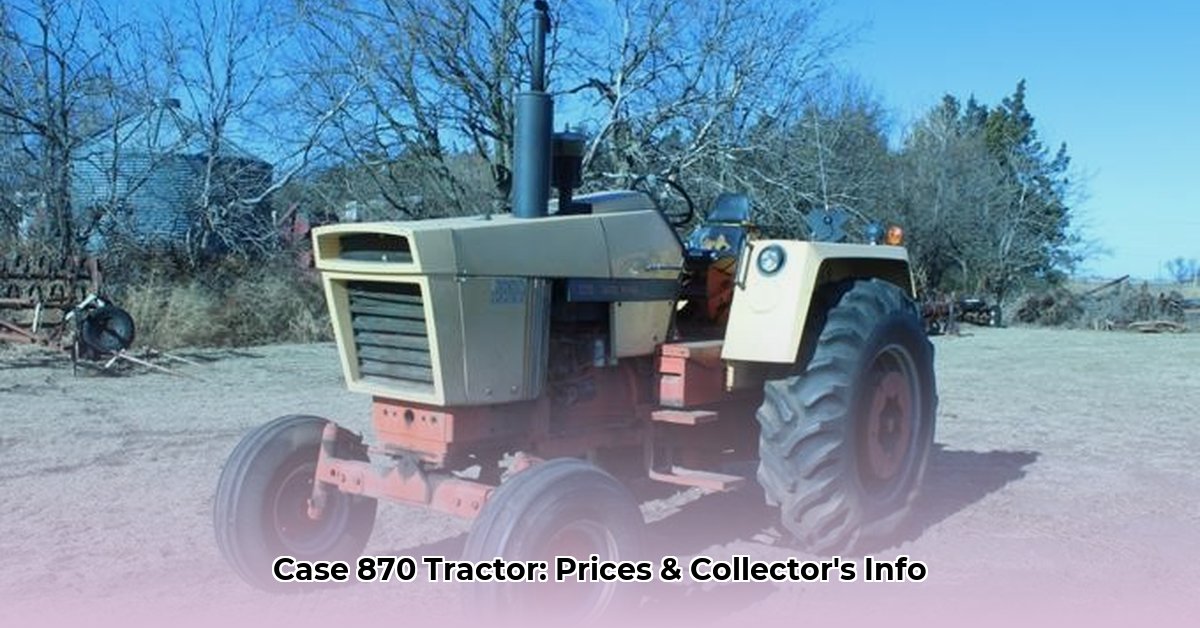
Case 870 Tractor: A Collector's Dream, A Farmer's Workhorse
The guttural rumble of a vintage Case 870 tractor—a symphony of steel and history. For many, it's more than just farm equipment; it's a legacy, a testament to simpler times, and a captivating piece of agricultural engineering. But navigating the world of buying, restoring, and maintaining a Case 870 requires knowledge and careful consideration. This guide cuts through the complexities, providing actionable intelligence for collectors, farmers, and dealers alike. Whether you're seeking a pristine showpiece or a dependable workhorse, this guide will help you find your perfect Case 870. For additional Case tractor resources, check out this helpful website.
Sourcing Your Case 870: A Step-by-Step Guide
Finding the right Case 870 is a journey, not a sprint. Begin with a clear vision: restoration project, working farm tool, or something in between? This dictates your search strategy and budget. A fully restored showpiece commands a far higher price than a runner needing TLC.
Online Exploration: Websites dedicated to vintage tractors, online auction sites (eBay, TractorHouse), and general classifieds are your starting points. Don't neglect specialized forums—they're treasure troves of information and hidden gems.
Beyond the Screen: Local auctions, farm equipment dealers, and even word-of-mouth within farming communities can yield unexpected finds. Consider broadening your geographic search radius; the ideal tractor might be a worthwhile road trip away. How far are you willing to travel for the right machine?
Pre-Purchase Inspection: A Critical Eye: Before committing, conduct a thorough pre-purchase inspection. This isn't a cursory glance, but a deep dive. Check these key areas:
- Engine: Listen for unusual noises; check compression, look for leaks or signs of previous repairs. A smoothly running engine is far more valuable than one that's been neglected.
- Transmission: Shift through the gears meticulously. Smooth shifting indicates a healthy transmission. Clunky shifts suggest trouble.
- Hydraulics: Test the hydraulics thoroughly for responsiveness and leaks. Hydraulic system failures can be expensive.
- Bodywork: Inspect for rust, dents, and any evidence of previous repairs. While some wear is expected, significant damage can significantly impact value and functionality.
- Documentation: Original owner's manuals and detailed service records substantially increase the value of a Case 870.
Authenticity Verification: For collectors, originality is paramount. Check serial numbers against Case records (if accessible). Look for original components; counterfeit parts are common and can diminish a restoration's value. Consult experts if uncertainties arise.
Negotiating the Price: Research comparable sales to determine a fair market value. Consider the tractor's overall condition, any included implements (e.g., plows, loaders), and its completeness. Negotiate respectfully but firmly.
Case 870 Specifications and Historical Significance
The Case 870, produced primarily from 1970 to 1975, was a workhorse of its era. Engine horsepower varied between roughly 70 and 80 hp, depending on the model year and configuration. Transmission options included 8-speed unsynchronized and 12-speed partial power-shift models. While the original price fluctuated, the value of a used Case 870 now depends on several key factors.
Case 870 Value: A Multifaceted Assessment
The value of a used Case 870 is not solely determined by its age and horsepower. Several factors significantly influence its worth:
| Factor | Impact on Price |
|---|---|
| Condition | Immaculate condition commands top dollar. |
| Originality | Original parts are highly sought-after. |
| Documentation | Service records and original manuals boost value. |
| Location | Local market demand significantly impacts price. |
| Restoration Quality | A professional restoration increases value. |
Case 870 for the Working Farm: A Practical Assessment
Using a Case 870 on a working farm presents both advantages and disadvantages:
Pros:
- Simplicity: Relatively simple mechanics and easier maintenance and repair.
- Part Availability: Used parts remain relatively abundant, thus reducing repair costs.
- Affordability: A significant cost savings compared to new tractors.
Cons:
- Fuel Efficiency: Lower fuel efficiency than more contemporary tractors.
- Power Output: Lower horsepower limits productivity on larger farms or with heavy-duty tasks.
- Maintenance: Requires more frequent and potentially more time-consuming maintenance than modern equivalents.
A thorough cost-benefit analysis is crucial before deciding if a Case 870 is suitable for your farming operation.
Appraising a Case 870 for Dealers and Auction Houses
Accurate appraisal requires expertise. Consider the condition, completeness, originality, and market research. For online listings, high-quality photos and detailed descriptions that highlight unique features and historical significance are paramount. Remember, targeted marketing to different buyers (collectors, farmers) significantly impacts success.
Key Takeaways
- Thorough Inspection: Always conduct a meticulous inspection.
- Market Research: Research comparable sales for fair pricing.
- Targeted Marketing: Tailor your marketing to your target audience.
- Understanding the Buyer: Value is subjective and depends on the buyer's preferences.
This guide aims to equip you with the necessary knowledge to confidently navigate the world of vintage Case 870 tractors. Happy hunting!